Physician Profile: Priya Deshpande, M.D.
of CPC-Central
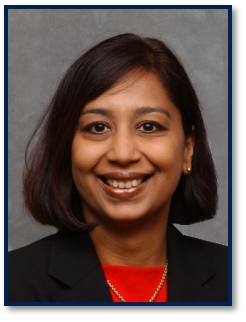
One of the first memories Priya Deshpande has of growing up in India is concern for her sick grandmother. Only a small child at the time, Priya recalls watching and listening intently when the doctor visited their home. She felt sad and frustrated that she could do nothing to help her only living grandparent, who was severely diabetic, wheelchair bound, and always quite ill.
Watching someone she loved so much suffer with a debilitating disease was perhaps the first seed of inspiration for Priyas career in medicine. I felt an inner need to help her and others like her, she explains. My parents have said many times that from a very early age, all I talked about was becoming a doctor. Never wavering from her goal, she remained in India, where she completed her formal education and embarked on her medical training.
Priya attended Catholic public school in the Bombay suburb where she and her family lived. Her school and community, like the rest of India, were characterized by a wide range of cultures and religions, such as Hinduism, Islam, Catholicism, and Buddhism. Diversity is something I became accustomed to growing up, she explains. India is a country made up of many states with different cultures, languages, foods, and religious beliefs. It is very complex. Even within Hinduism, the predominant religion in India, there are many sects that worship different deities.
|
|
In spite of the problems inherent in such a varied society, cultural diversity offers the advantage of a broader view of the world. Dr. Deshpande believes that growing up and working in India taught her to listen to and appreciate people with life experiences different than her own and to recognize the common threads shared by the worlds religions, cultures, and humanity itself. What I have learned is that basically people are the same everywhere, she says. Human nature crosses all barriers.
Another aspect of having grown up in India that Dr. Deshpande values is the medical education and residency training she received. She attended GS Medical College in Bombay, and after graduation, completed a residency training program in obstetrics and gynecology. The training I received there is quite dissimilar from medical education in the United States, she explains. Because there is no health insurance, there is much more emphasis on treatment based on clinical judgment rather than diagnostic testing. Physicians are trained to be very selective of diagnostic testing and use of the sophisticated equipment that is available.
The greatest benefit of her medical training in India was her profoundly demanding clinical experience. During her residency at King Edward Memorial Hospital, a very old British hospital affiliated with the medical college, it was not uncommon for her to deliver 35-40 babies a day. The intensity of this training period made the transition to private practice in America very easy. I believe the demands of my clinical experience in India have been a big advantage to me as a physician, she says.
While attending medical school, Priya met a fellow student, Sharad Ghamande, who would eventually become her husband. They married after their residency training in Bombay, about 6 months before moving to the United States in 1991. They chose to make America their home to broaden their personal and professional experience. We both enjoy travel and other cultures, she explains, and we were interested in how medicine is taught and practiced here. Another factor influencing their move was that Priyas older brother, Harsha, had relocated to the United States many years earlier. He is a media consultant in California, and while they do not see each other often, they keep close contact.
Priya and Sharad first settled in Massachusetts near Boston, where they spent a year taking board examinations required of foreign medical school graduates before entering an American residency program. When they successfully completed the series of exams, Dr. Deshpande began a family practice residency at the University of Massachusetts while her husband started an obstetrics and gynecology residency at Boston University.
While at UM, she had the privilege of serving as medical director of a Southeast Asian health project, an outreach program designed to familiarize immigrants with the American health care system. She found the experience rewarding not only because it allowed her to help people who needed her, but also because it gave her an opportunity to work with and learn about people of other Eastern cultures.
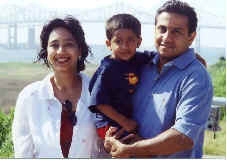
For her American medical training, Dr. Deshpande chose family medicine rather than obstetrics and gynecology because she it allowed her to treat a broader range of people while continuing to utilize her skills in ob/gyn. After completing the family practice residency program at UM, she served on the medical university faculty as an assistant professor, researcher and clinician for 2 years. In 1997, the couple moved to Buffalo, NY, where Dr. Deshpande had a private practice in family medicine and her husband, Dr. Ghamande completed a fellowship in gynecologic oncology. While in Buffalo, the couple became a family, welcoming into their lives a son named Salil, now 3 years old.
When her husband finished his training, they decided to move to the South, as it was similar in terms of weather to where they had grown up. Her husband accepted a position at the Medical College of Georgia. Because of her love of diversity, she specifically looked for a practice that was less rather than more homogenous and found just what she wanted in the Center for Primary Care. I wanted to be in a family practice group, and I liked the individuality I saw among the CPC physicians, she says. I liked their personalities, felt we had common goals, and found them to be a well-rounded group. Last fall, Dr. Deshpande became the fourth physician on staff at CPC Central.
Since settling in Augusta, Dr. Deshpande and her husband have spent much of their time becoming acquainted with the community and building their medical practices, but whenever possible, they travel and explore our own areas diversity. We both love traveling, she says, naming Europe, India, the Caribbean and other areas of the United States as favorite destinations, and we relish all types of food, especially Thai , Indonesian and Ethiopian cuisine. At home, Dr. Deshpande likes to cook and enjoys decorating their home with items they have acquired during their travels. I like surrounding myself with things with meaning and memories, she says. Interior design is an outlet for her creative side and a personal interest she would like to develop in the future.
Professionally, Dr. Deshpande wants to continue with her earliest goals of being a help to the people she cares for. I want to make people feel better and to guide them through the process of dealing with complicated health problems, she says. I want to be someone they can talk to about their health or anything else.
In pursuing this goal, Dr. Deshpande consciously strives to keep a healthy perspective on lifes events. I try to stay focused on the big picture both at work and in my family life, she explains. It is easy to get caught up in little problems and the constant demands in life, but I try to step back and ask myself, Whats more important here? This philosophy allows her to focus on the important aspects of her work, her personal life, and her purpose in the world, and as a CPC physician, to bring both a balanced perspective and another interesting dimension to the Center for Primary Care.